 Auraz Tech
How to Check if a Used Android Phone is Original (Not Fake, Clone or Refurbished) Before Buying in Pakistan (2026)
The deal looks irresistible: a flagship phone at half the market price, "sealed box, PTA approved," from a seller on OLX or a shop in Hafeez Center. You hand over the cash, get home, and discover the "Snapdragon 8 Gen 3" is a three-year-old budget chip, the "sealed" box was re-shrink-wrapped, or the phone stops making calls a month later because its IMEI was never PTA-registered. Pakistan's used-phone market is full of genuine bargains — but it's also full of fakes, clones, and refurbished units sold as new. The good news: you can catch almost all of them in ten minutes with the phone in your hand, using nothing but secret codes, free apps, and your eyes. Here's exactly how.
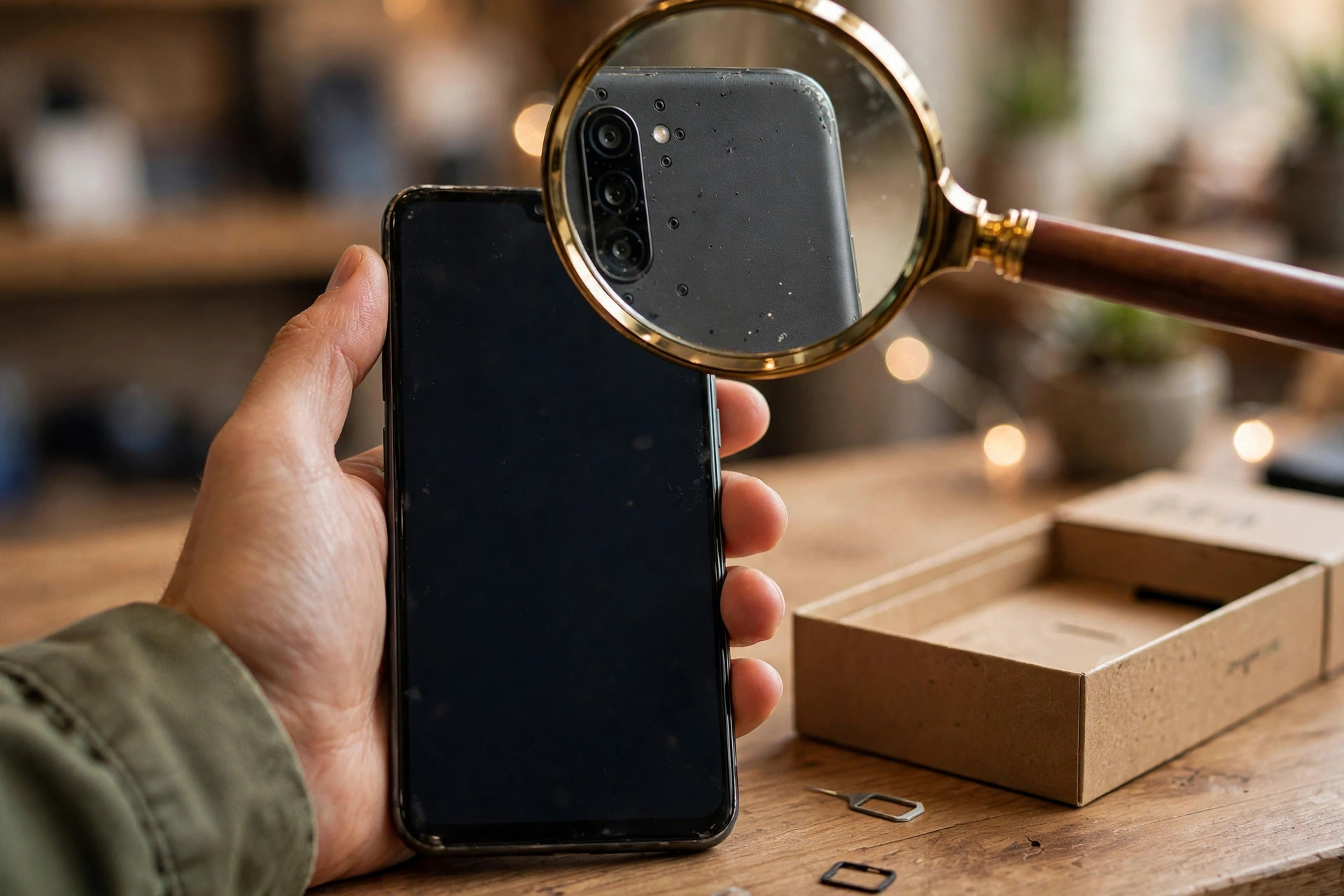
Step 1: Start With the IMEI — The Phone's Fingerprint
Every genuine mobile phone has a unique 15-digit IMEI (International Mobile Equipment Identity) number. Fake and cloned phones either share copied IMEIs or carry invalid ones — so the IMEI is your single most powerful authenticity check. Start here, and do it on the phone itself, never from a number the seller reads out to you:
- Open the phone's dialler and type *#06#. The IMEI appears instantly on screen — no need to press the call button.
- On a dual-SIM phone, you'll see two IMEIs — one per SIM slot. Note both, because sellers sometimes register only one of the two.
- Also check Settings > About phone > Status — the IMEI listed there should match what *#06# showed.
If the phone shows no IMEI at all, or *#06# returns an obviously broken number (like all zeros), that's a red flag for serious baseband or board-level problems — or a crude clone. Either way, walk away.
Step 2: Run the PTA DIRBS Check (SMS to 8484)
Pakistan's PTA runs DIRBS — the system that tracks every IMEI used on Pakistani networks. A free SMS tells you whether the phone in your hand is legitimately registered, and crucially, what model the IMEI belongs to. If the reply says the IMEI belongs to a different model than the phone you're holding, you're looking at a clone with a copied IMEI.
There are three free ways to check:
- SMS: send the 15-digit IMEI as a text message to 8484. You get an instant reply with the device status.
- USSD: dial *8484# from the dialler, choose the device-status option, and enter the IMEI — handy when you're standing in a shop with weak data coverage.
- Website or app: enter the IMEI at dirbs.pta.gov.pk, or use the official DIRBS/DVS app from the Play Store for a more detailed view you can screenshot.
Here's what the replies mean:
- Compliant: the IMEI is PTA-approved/registered — the safe result. The reply also shows the brand and model, so confirm it matches the phone.
- GSMA Valid: the IMEI is genuine but not PTA-registered — the phone needs registration (and possibly tax) within 60 days of first use on a Pakistani network.
- Non-Compliant: the IMEI is invalid, duplicated, or the phone will be blocked — do not buy it.
- Stolen: the IMEI has been reported stolen or lost — walk away immediately.
One more Pakistan-specific rule: from the moment an imported phone first connects to a Pakistani network, you have 60 days to complete registration before PTA blocks it — at which point it works on Wi-Fi only. If the seller says "just pay the tax later," remember that a blocked phone can cost you both the tax and weeks of hassle. (Our full guide on checking PTA approval covers the registration and tax process step by step.)
Step 3: Run the Hidden Hardware Diagnostic Tests
Genuine phones from major brands ship with built-in hardware test menus that clones and cheap counterfeits usually can't replicate. Running these in front of the seller takes two minutes and exposes dead touchscreens, broken sensors, and fake hardware:
- Samsung: open the dialler and type *#0*# — a diagnostic menu appears immediately. Test the touchscreen (draw over every square), the red/green/blue display colours (dead pixels and replaced low-quality screens show up here), vibration, speaker, cameras, and every sensor including the magnetic and proximity sensors. If the code does nothing, the phone may be a clone — or the feature was disabled by the carrier, so treat it as one data point, not a verdict.
- Xiaomi / Redmi / Poco: go to Settings > About phone > All specs, find Kernel version and tap it three times to open the CIT hardware test menu with touch, display, speaker, and sensor tests.
- Realme: open the Phone Manager app and look for the Diagnostics option.
- Any other brand: install Phone Doctor Plus from the Play Store — it runs 30+ automated hardware tests (multi-touch, sensors, cameras, speakers, battery) with a pass/fail report.
Pay special attention to the proximity sensor (screen should turn off when you cover the top of the phone during a call) and auto-rotate — these are the sensors most often missing or dead on clones and on phones with replaced screens.
Step 4: Verify the Real Specs With CPU-Z (Catch the Clones)
Here's the trick that catches the cleverest fakes: cloned phones run modified software that lies in Settings > About phone. A PKR 15,000 clone can proudly display "12GB RAM, Snapdragon 8 Gen 3" — the numbers are typed into the software, not read from the hardware. Never trust the About phone screen on a suspicious device.
Instead, install CPU-Z or Device Info HW from the Play Store (both free) and compare what they report against the manufacturer's official specifications for that model:
- Chipset: the real SoC name and architecture. If the box says Snapdragon but CPU-Z shows a MediaTek MT-series budget chip, it's a clone.
- RAM and storage: real totals, not the inflated numbers in About phone.
- Display resolution and refresh rate: clones often use cheaper 720p panels while claiming 1080p or 120Hz.
- Camera sensors: the actual sensor models — clones frequently have one real camera and two decorative lenses.
- Sensor list: genuine phones list a full set of sensors (accelerometer, gyroscope, proximity, compass, light). A suspiciously short list means fake or stripped hardware.
This single check takes three minutes and is the hardest one for counterfeiters to beat — they can fake the software labels, but they can't fake the actual silicon inside.
Step 5: Physical Inspection — Spotting Refurbished and Repaired Phones
A refurbished phone isn't necessarily a bad buy — but it should be priced as refurbished, not as new. And a phone that's been badly repaired can develop faults months later. Inspect the hardware like this:
- Match the serial numbers. The IMEI on the box, the IMEI shown by *#06#, and the IMEI printed on the SIM tray must all match. Mismatches mean the box, tray, or phone were swapped — a classic sign of a refurbished or assembled-from-parts unit.
- Check the seals and screws. Look at the screws near the charging port on iPhones-style designs, or the back-panel seams on Android phones. Stripped, mismatched, or missing screws mean the phone was opened. Many phones have a water-damage indicator (a small sticker inside the SIM tray slot that turns red on water contact) — if it's missing or red, the phone has seen water.
- Run your finger around the screen edge. The gap between the display and the frame should be perfectly even all the way around. Uneven gaps, raised edges, or a screen that flexes slightly under pressure point to a replaced (often lower-quality) display.
- Inspect the camera glass. Original camera modules sit flush with clean, precise cutouts. Glue residue, dust trapped under the lens, or a lens that sits crooked means the back was replaced.
- Check the charging port. Shine a light into the USB-C port — heavy scratching and worn contacts on a "brand new, sealed" phone tell you it's been charged hundreds of times.
- Smell the phone. Seriously — a strong chemical or glue smell is a telltale sign of a recent screen or back-panel replacement done in a repair shop.
Step 6: The Smart Buyer's Final Checklist
Run through this list before any money changes hands, whether you're buying from a shop in Hall Road or a seller you found online:
- Test with your own SIM. Insert your SIM and make a call, send an SMS, and load a webpage on mobile data. This confirms both SIM slots work and the IMEI isn't blocked — a phone that "works perfectly on Wi-Fi" but has no signal with your SIM is likely PTA-blocked.
- Check the battery health. A used phone's battery is its most worn part. See our guide on checking battery health on Android before you commit — a phone needing a PKR 3,000–5,000 battery replacement isn't the bargain it looks like.
- Factory-reset in front of the seller. Ask the seller to remove their Google account and reset the phone while you watch. A phone that can't be reset because of "forgotten passwords" may be FRP-locked (Factory Reset Protection) — meaning it's tied to someone else's Google account and could lock you out permanently.
- Get a receipt with the IMEI written on it. Any reputable shop will write the IMEI on the bill. If the seller refuses, that's your answer about how much they stand behind the phone.
- Distrust prices that are too good. Check the going rate for that model on two or three sources first. A phone priced 30–40% below market isn't a lucky find — it's a clone, a blocked IMEI, or stolen.
- Understand "non-PTA" and "WiFi only." These labels mean the phone is not PTA-registered or has already been blocked — it will never make calls or use mobile data on Pakistani networks, no matter what the seller promises about "getting it approved later." Only buy one if you genuinely want a Wi-Fi-only device.
- Meet in person, in daylight, with time. Never pay in advance for a phone you haven't held. The ten minutes these checks take are nothing compared to the months of regret a bad purchase brings.
FAQ
How do I check if my Android phone is original or fake using the IMEI?
Dial *#06# on the phone to display its 15-digit IMEI (a dual-SIM phone shows two). Send each IMEI by SMS to 8484 — PTA's DIRBS system replies with the device's status and model. If the model in the reply doesn't match the phone in your hand, or the result says Non-Compliant or Stolen, walk away from the deal.
What is the Samsung secret code to test if a phone is original?
Dial *#0*# on a Samsung phone to open the hidden hardware diagnostic menu — no need to press the call button. You can test the touchscreen, red/green/blue display colours, vibration, speaker, cameras and every sensor. Counterfeit and heavily repaired phones often fail these tests or don't open the menu at all.
How can I tell if a phone is refurbished rather than brand new?
Check that the IMEI on the box matches the one shown by *#06# and the one printed on the SIM tray. Look for uneven gaps between the screen and frame, non-original screws, missing water-damage indicators, glue residue around the camera glass, and a worn charging port — all signs the phone was opened and repaired. Refurbished phones can be fine buys, but only at a refurbished price.
Can a fake phone show wrong specs in Settings?
Yes. Cloned phones often run modified software that lies in Settings > About phone — a PKR 15,000 clone can display flagship specs. Install CPU-Z or Device Info HW from the Play Store to read the real chipset, RAM, storage and sensor list, then compare against the manufacturer's official specifications for that model.
Should I buy a phone advertised as 'WiFi only' or 'non-PTA' in Pakistan?
Only if you understand exactly what you're getting: 'non-PTA' means the phone is not registered with PTA, and 'WiFi only' means it has been blocked from calls, SMS and mobile data. These phones can only ever work on Wi-Fi. For a daily-use phone in Pakistan, insist on a PTA-compliant IMEI and verify it yourself before paying.